
Transcript
A. Police functions
In Germany, police agencies are responsible for investigating crime, enabling the work of the prosecution services and courts. This is called repressive police activity (i.e. enforcing the criminal law after it has been breached). However, in everyday life, police work is primarily preventative.
B. Hazard prevention
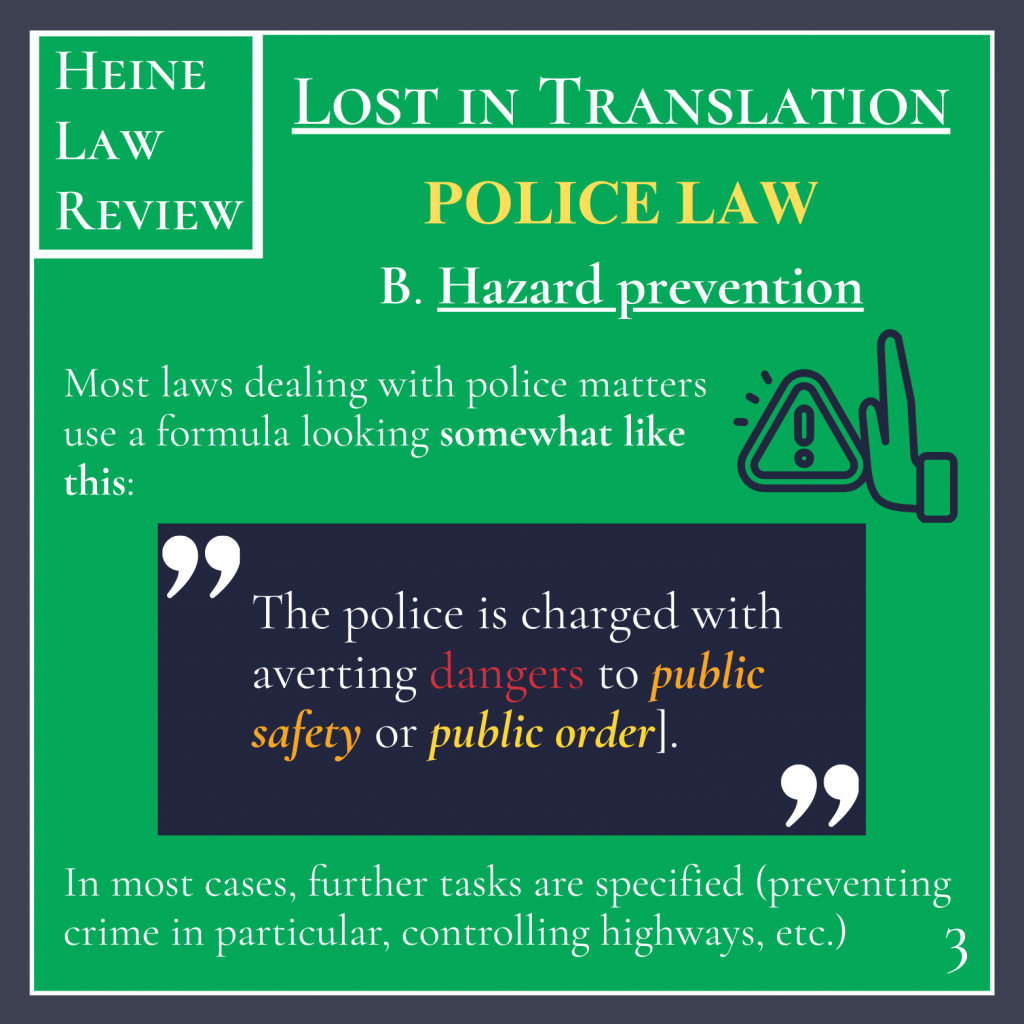
Most laws dealing with police matters use a formula looking somewhat like this:
“The police is charged with averting dangers to public safety or public order.“
In most cases, further tasks are specified (preventing crime in particular, controlling highways, etc).
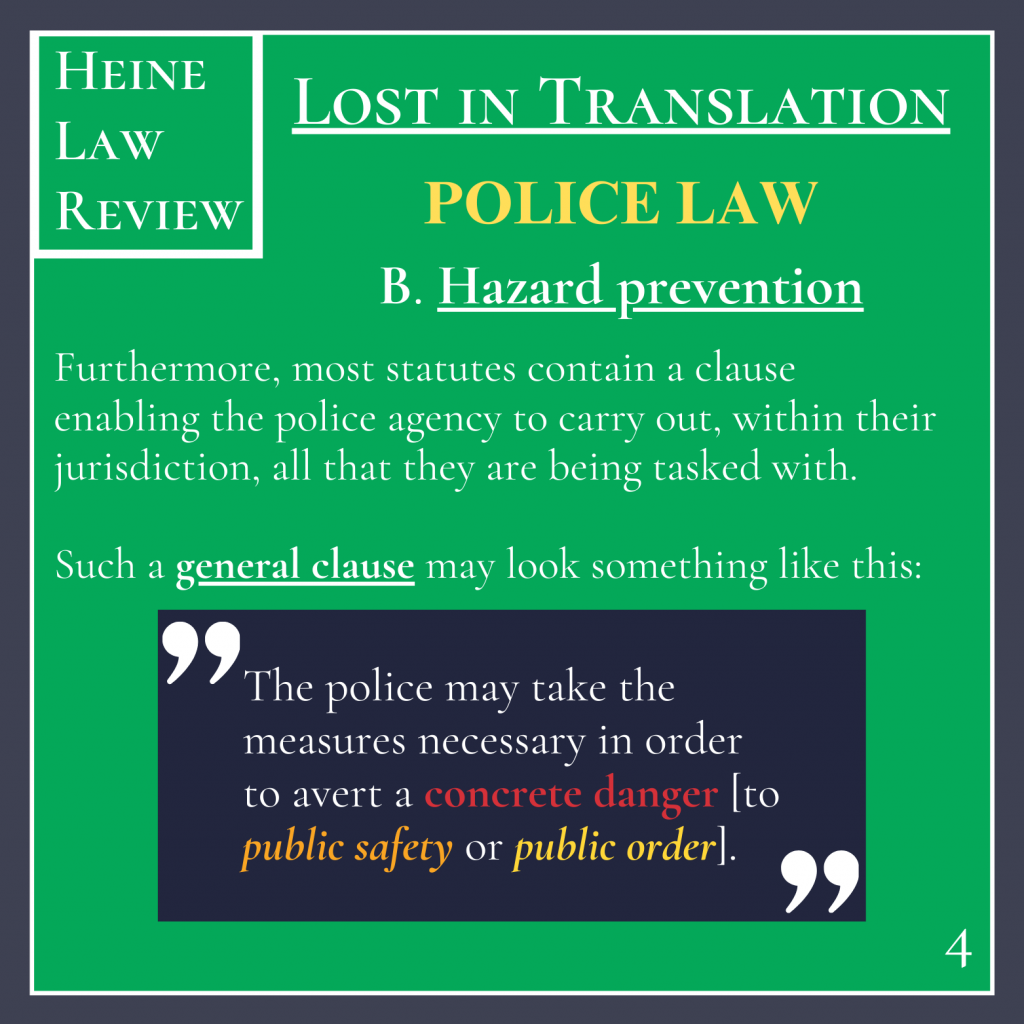
Furthermore, most statutes contain a clause enabling the police agency to carry out, within their jurisdiction, all that they are being tasked with. Such a general clause may look something like this:
“The police may take the measures necessary in order to avert a concrete danger [to public safety or public order].“
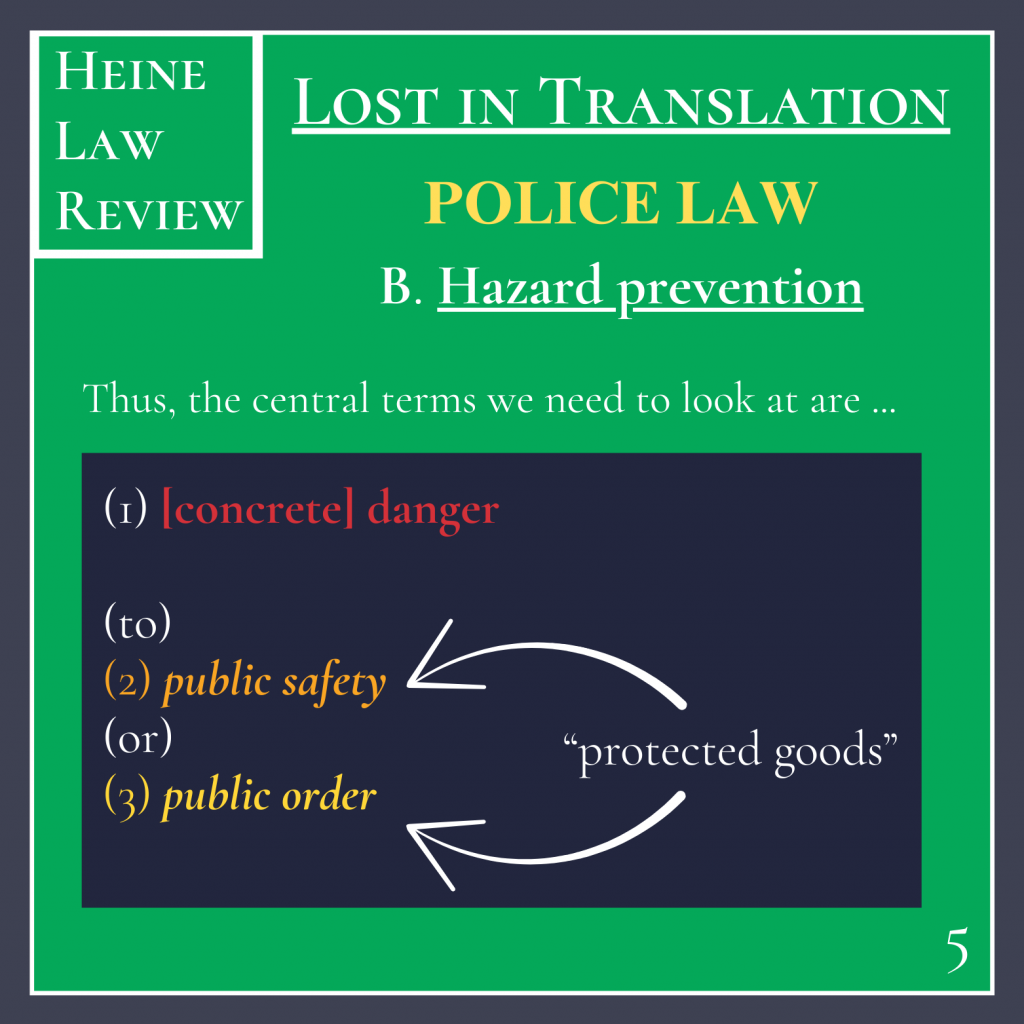
Thus, the central terms we need to look at are…
- (1) [concrete] danger
- to the “protected goods” of (2) public safety, or (3) public order.
C. Terminology
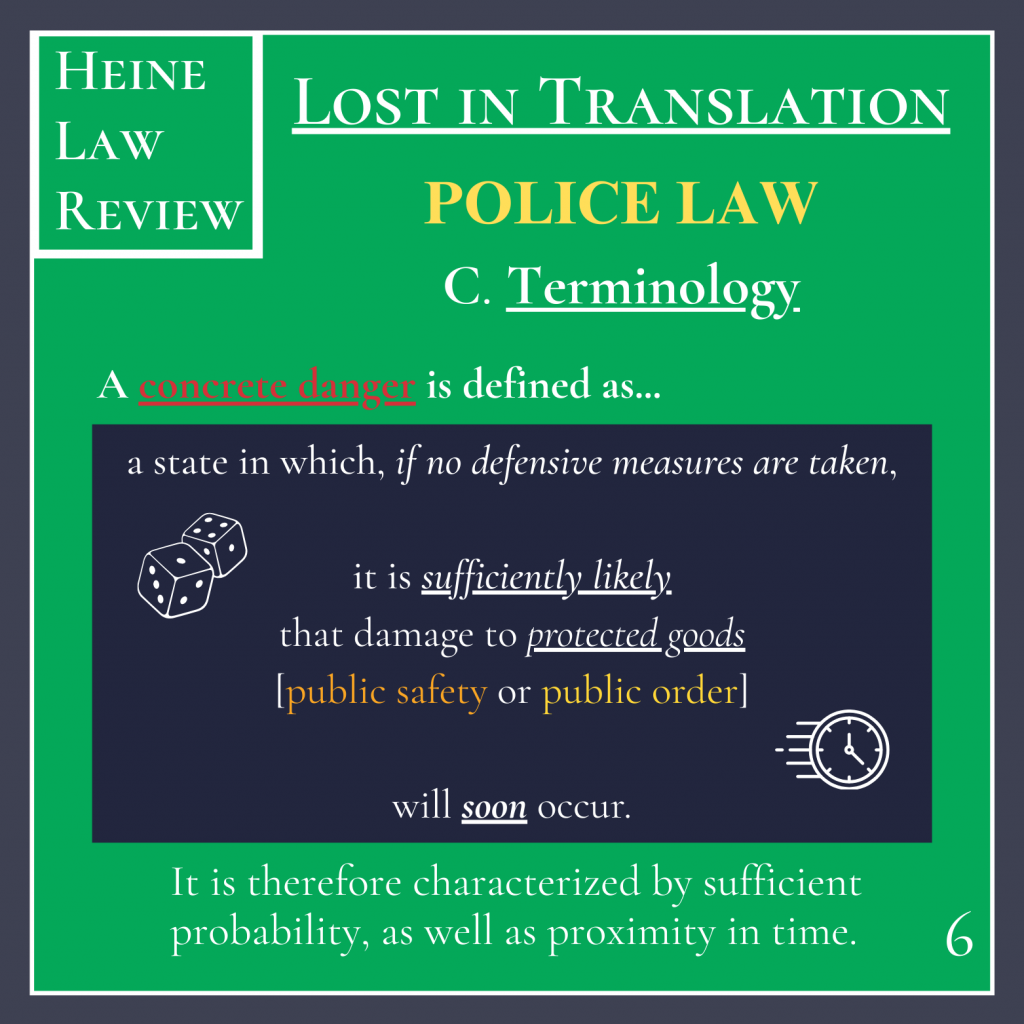
A concrete danger is defined as “a state in which, if no defensive measures are taken, …
- it is sufficiently likely
- that damage to protected goods [public safety or public order]
- will soon occur.
It is therefore characterized by sufficient probability, as well as proximity in time.
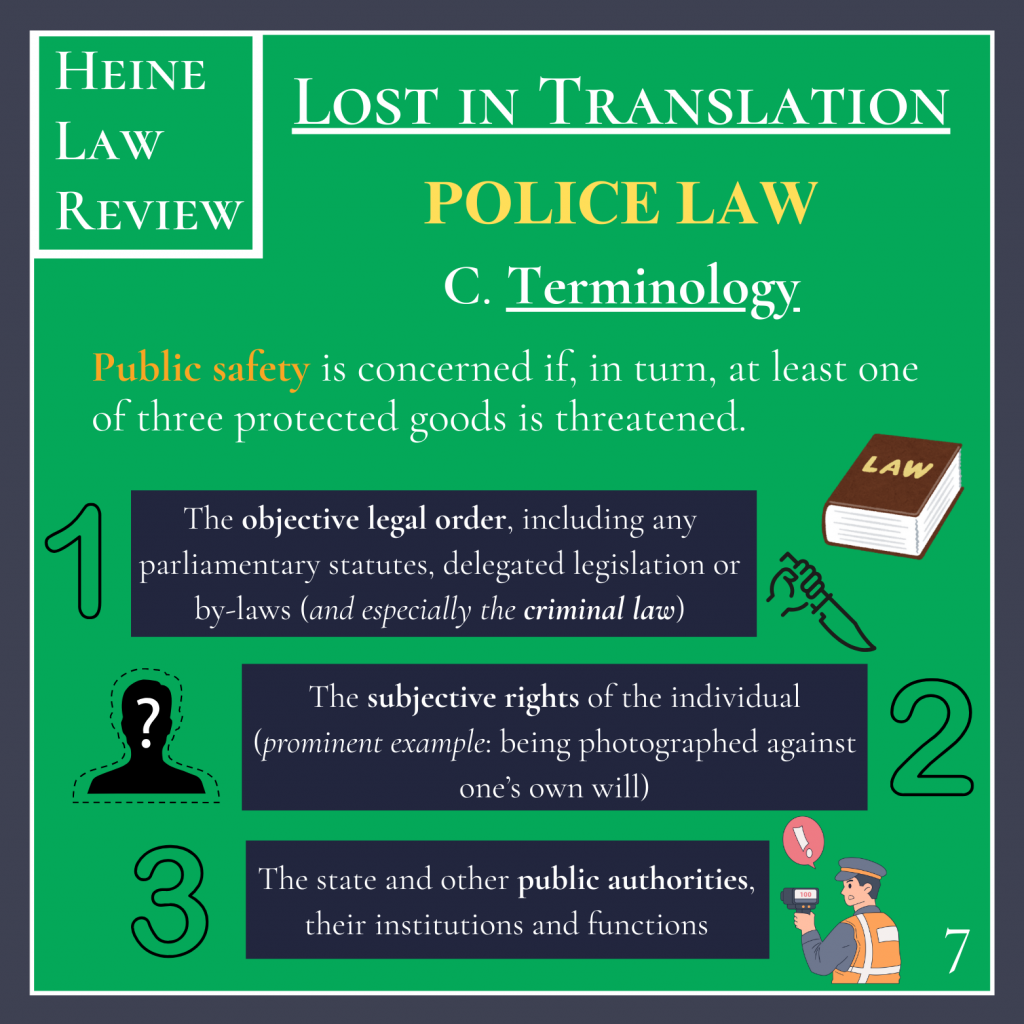
Public safety is concerned if, in turn, at least one of three protected goods is threatened:
- The objective legal order, including any parliamentary statutes, delegated legislation or by-laws (and especially the criminal law).
- The subjective rights of the individual (prominent example: being photographed against one’s own will).
- The state and other public authorities, their institutions and functions.
As opposed to public safety, public order is a residual category meant to encompass behaviour that is not illegal or even, strictly speaking, harmful but contravenes any unwritten norms of civilized coexistence. Due to its uncertainty, perceived anti-individualism, and possible lack of democratic legitimacy, the public order is to be invoked sparingly. (Controversial) Examples include homelessness, public nudity, martial arts, and extremist iconography.