Transcript
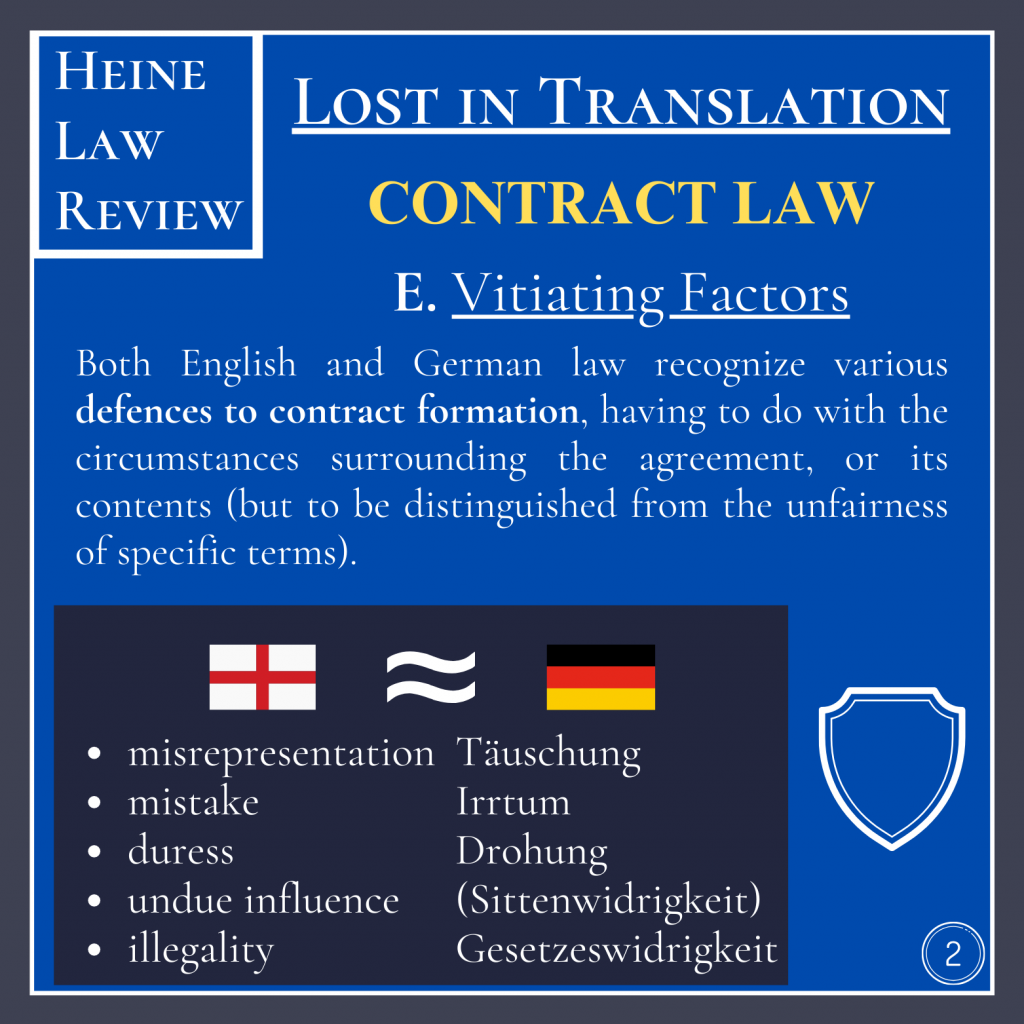
E. Vitiating Factors
Both English and German law recognize various defences to contract formation, having to do with the circumstances surrounding the agreement, or its contents (but to be distinguished from the unfairness of specific terms).
Overview
- misrepresentation ~ Täuschung
- mistake ~ Irrtum
- duress ~ Drohung
- undue influence ~ (Sittenwidrigkeit)
- illegality ~ Gesetzeswidrigkeit.
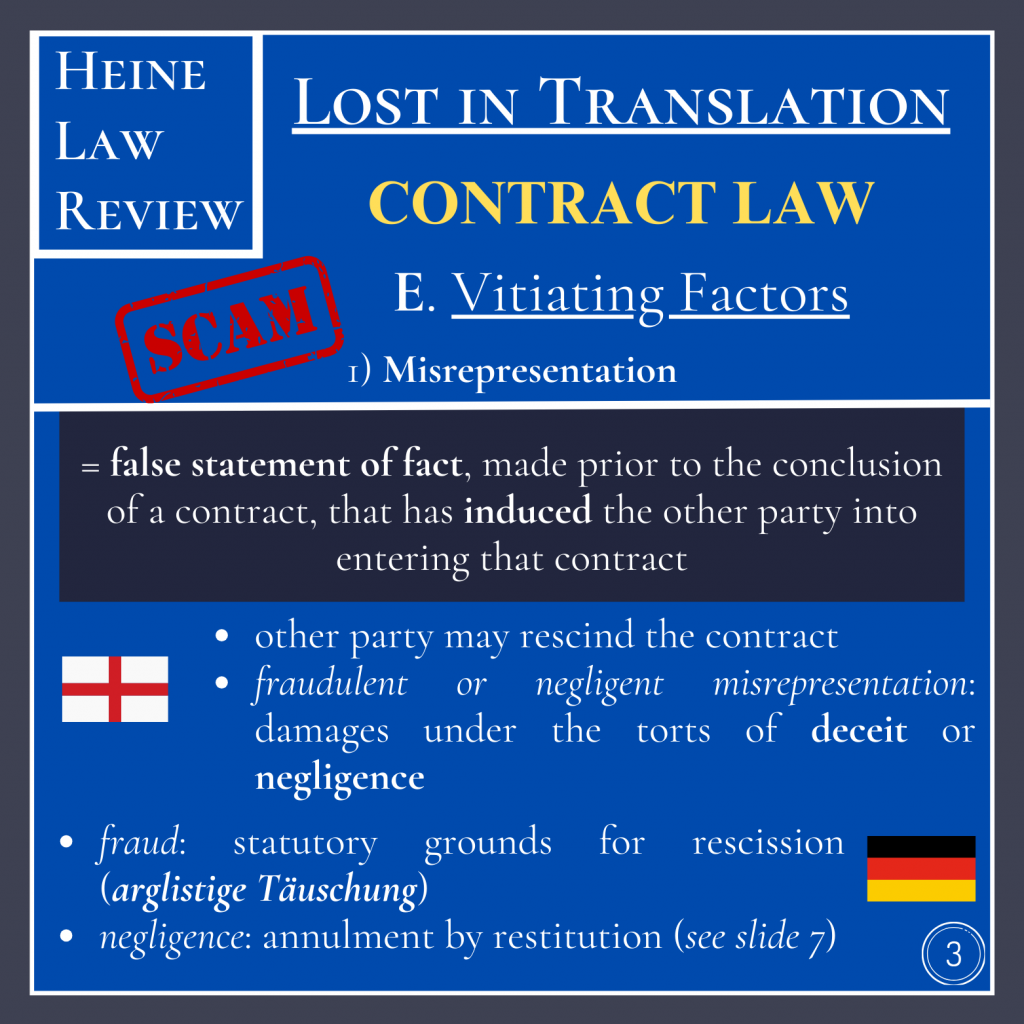
1) Misrepresentation: A false statement of fact, made prior to the conclusion of a contract, that has induced the other party into entering that contract.
- English law: The other party may rescind the contract. If the misrepresentation was made fraudulently or negligently, damages may be owed under the torts of deceit or negligence.
- German law: Fraud = statutory grounds of rescission (arglistige Täuschung), negligence = annulment by restitution (see below).
2) Mistake
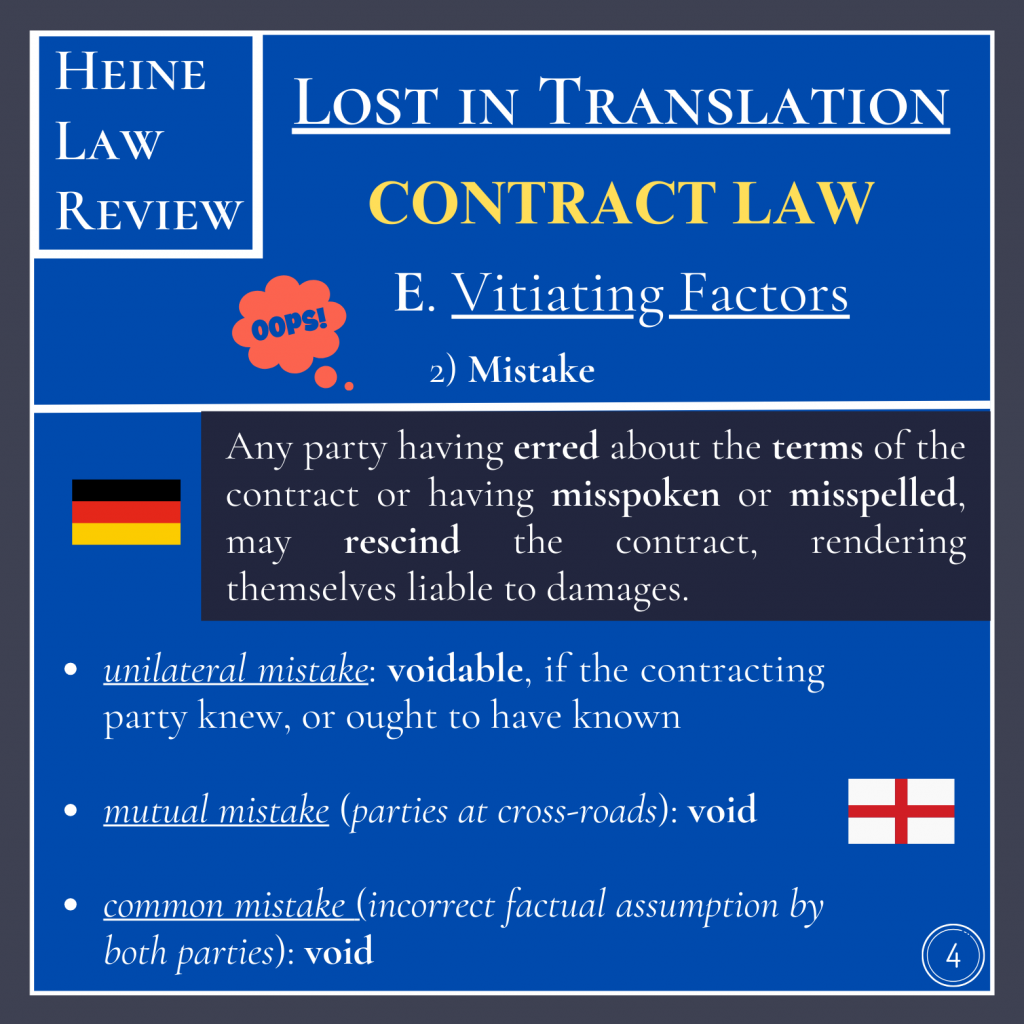
- German law: Any party having erred about the terms of the contract or having misspoken or misspelled, may rescind the contract, rendering themselves liable to damages.
- English law
- unilateral mistake: voidable, if the contracting party knew, or ought to have known
- mutual mistake (parties at cross-roads): void
- common mistake (incorrect factual assumption by both parties): void.
3) Undue influence
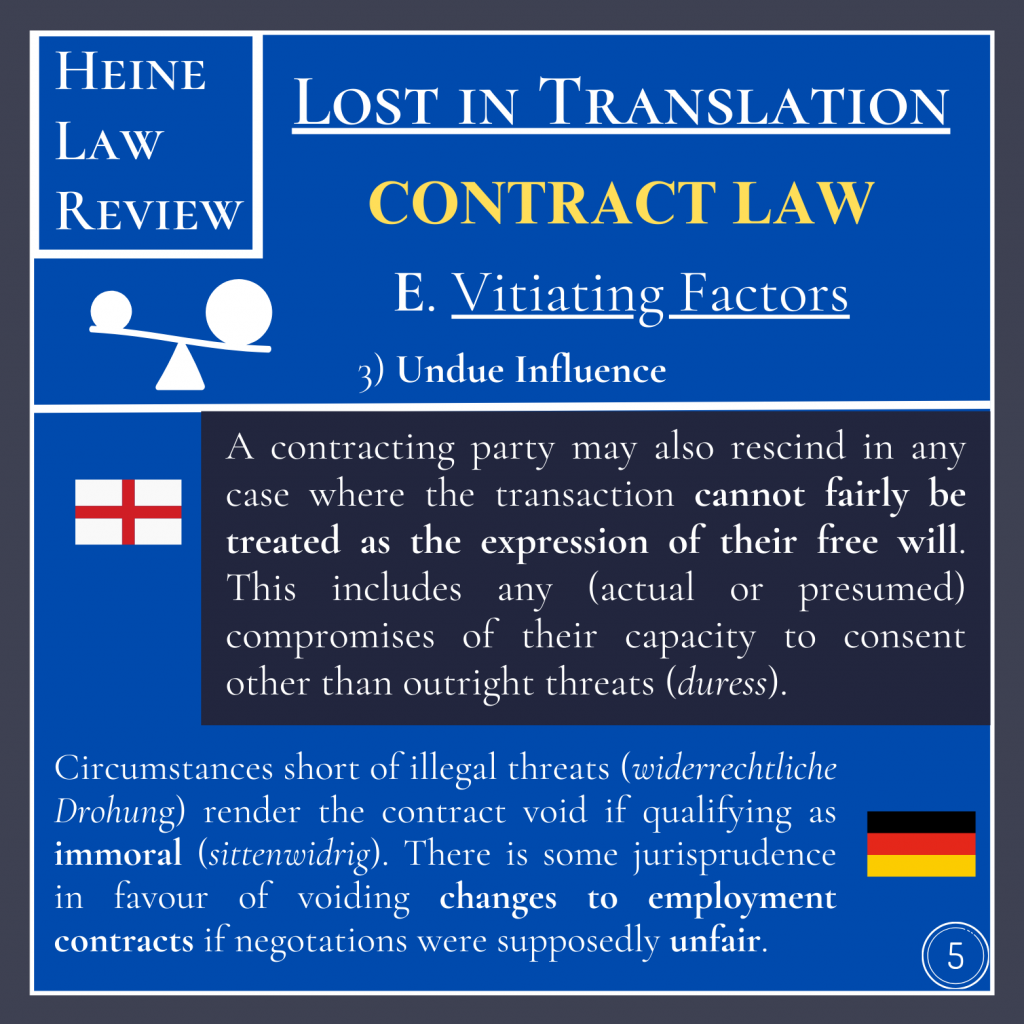
- English law: A contracting party may also rescind in any case where the transaction cannot fairly be treated as the expression of their free will. This includes any (actual or presumed) compromises of their capacity to consent other than outright threats (duress).
- German law: Circumstances short of illegal threats (widerrechtliche Drohung) render the contract void if qualifying as immoral (sittenwidrig). There is some jurisprudence in favour of voiding changes to employment contracts if negotiations were supposedly unfair.
F. Contract Interpretation
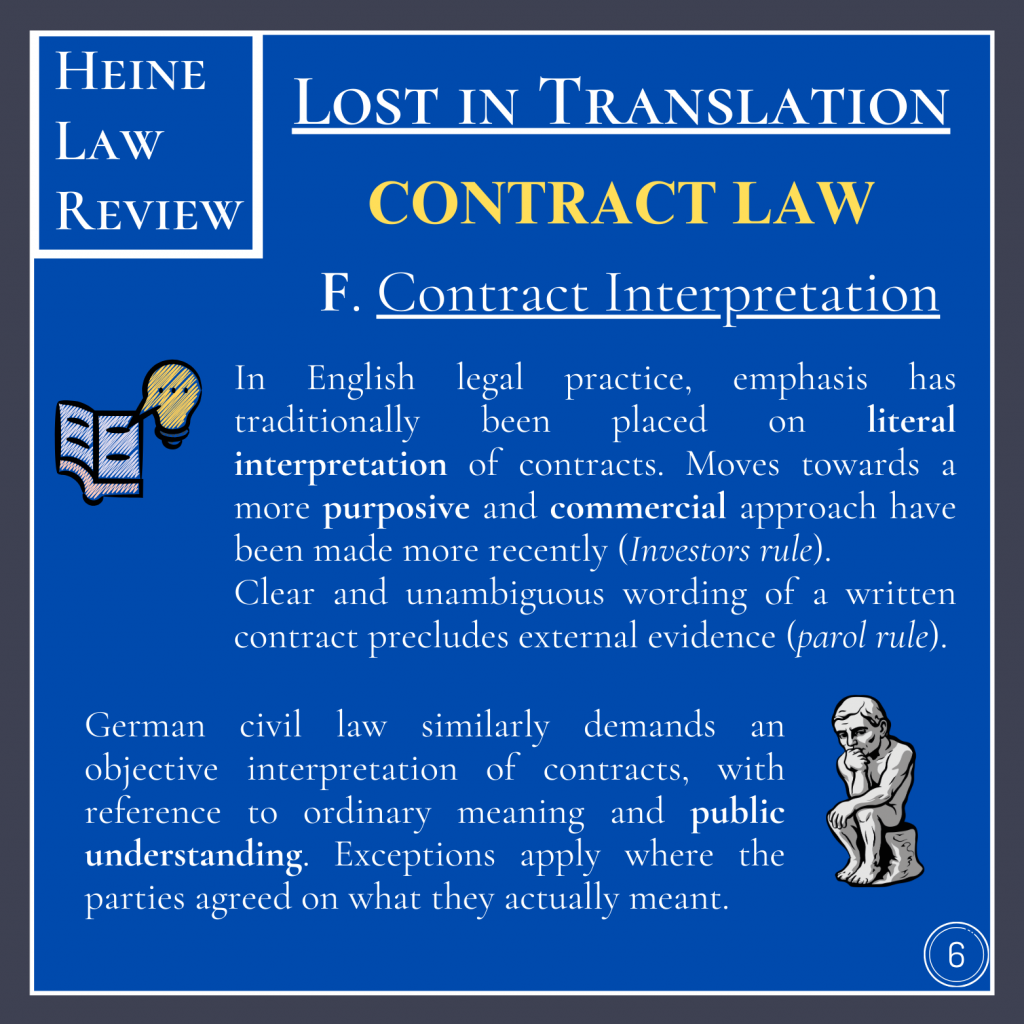
In English legal practice, emphasis has traditionally been placed on literal interpretation of contracts. Moves towards a more purposive and commercial approach have been made more recently (Investors rule). Clear and unambiguous wording of a written contract precludes external evidence (parol rule).
German civil law similarly demands an objective interpretation of contracts, with reference to ordinary meaning and public understanding. Exceptions apply where the parties agreed on what they actually meant.
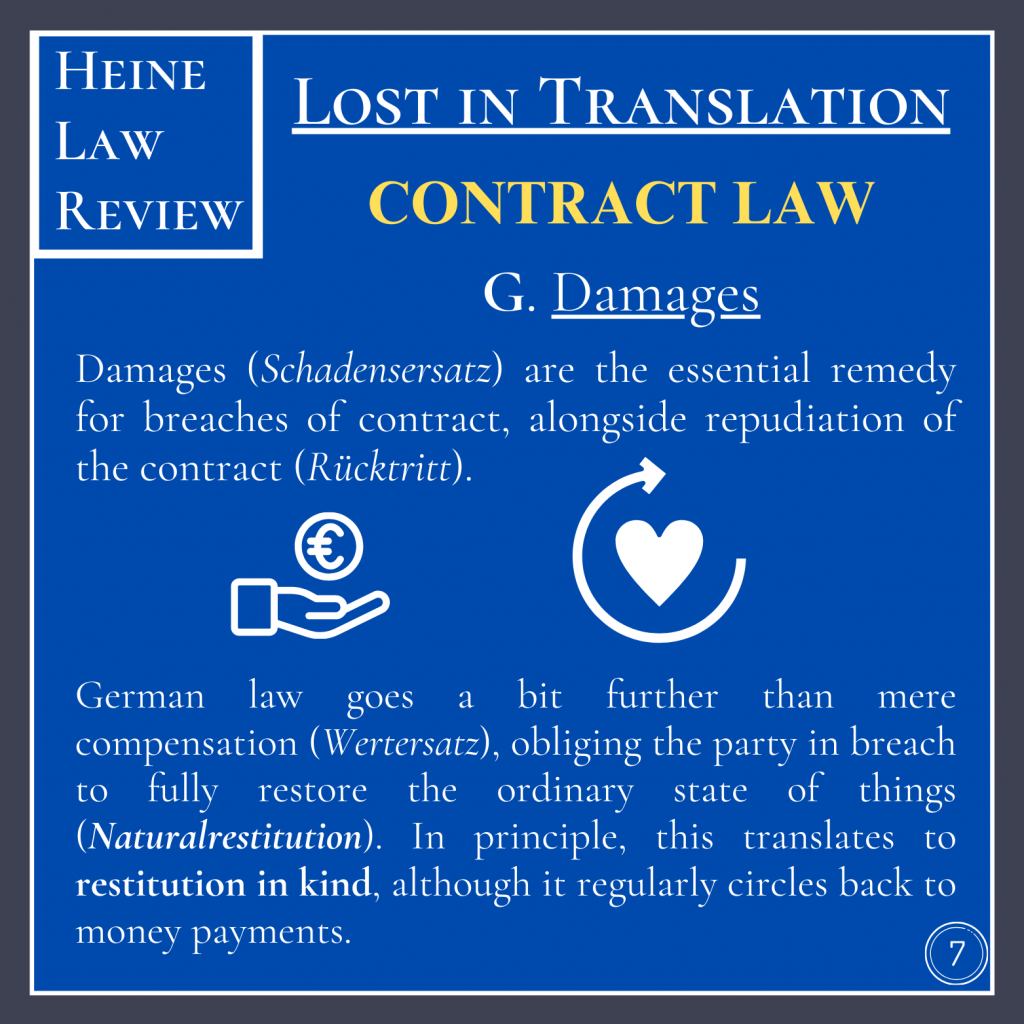
G. Damages
Damages (Schadensersatz) are the essential remedy for breaches of contract, alongside repudiation of the contract (Rücktritt).
German law goes a bit further than mere compensation (Wertersatz), obliging the party in breach to fully restore the ordinary state of things (Naturalrestitution). In principle, this translates to restitution in kind, although it regularly circles back to money payments.