
Transcript
A. Introduction
A donation is a type of contract found in sections 516 and following of the German Civil Code (BGB). It is characterized by the gratuitous enrichment of another person.
Unlike in common law, the lack of remuneration does not disqualify the donation from being a binding and enforceable contractual arrangement. The donation must be distinguished from a gratuitous loan, by way of its permanence.
B. Types
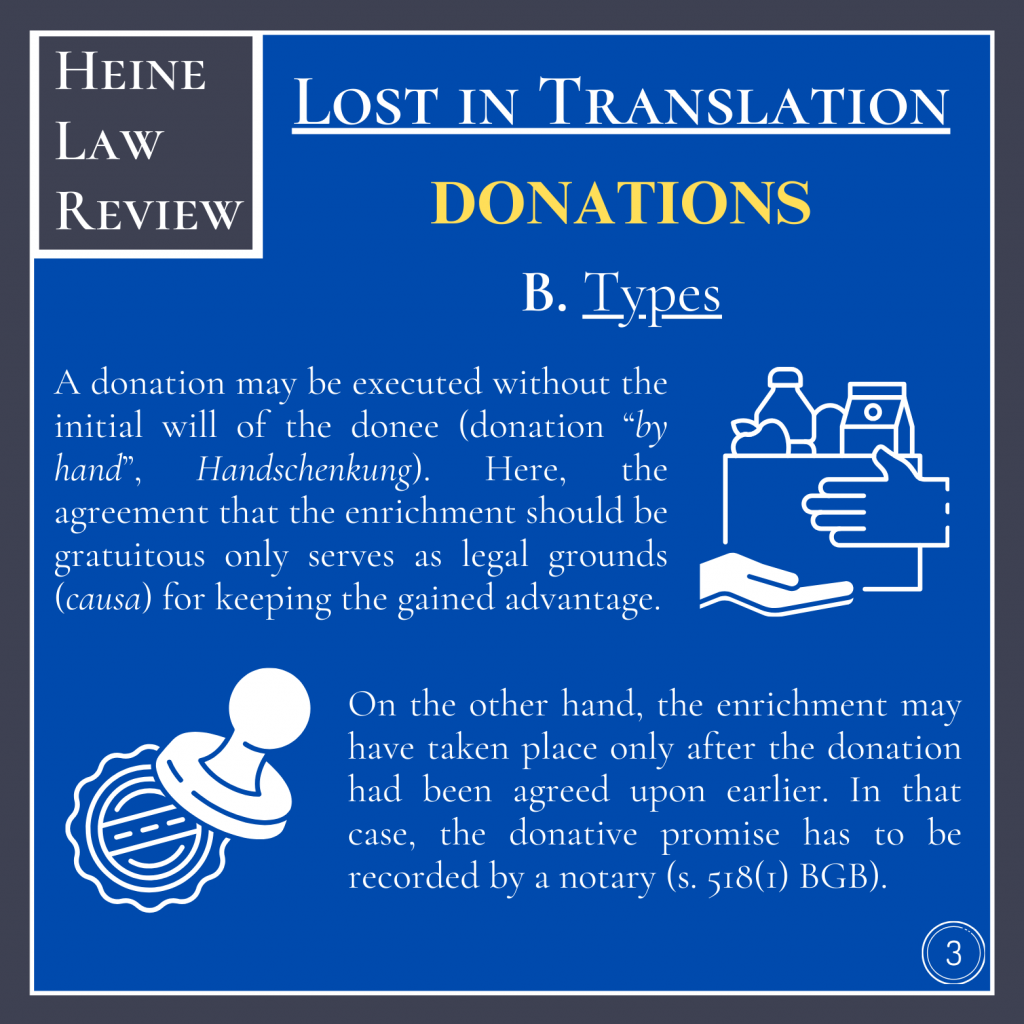
A donation may be executed without the initial will of the donee (donation “by hand”, Handschenkung). Here, the agreement that the enrichment should be gratuitous only serves as legal grounds (causa) for keeping the gained advantage.
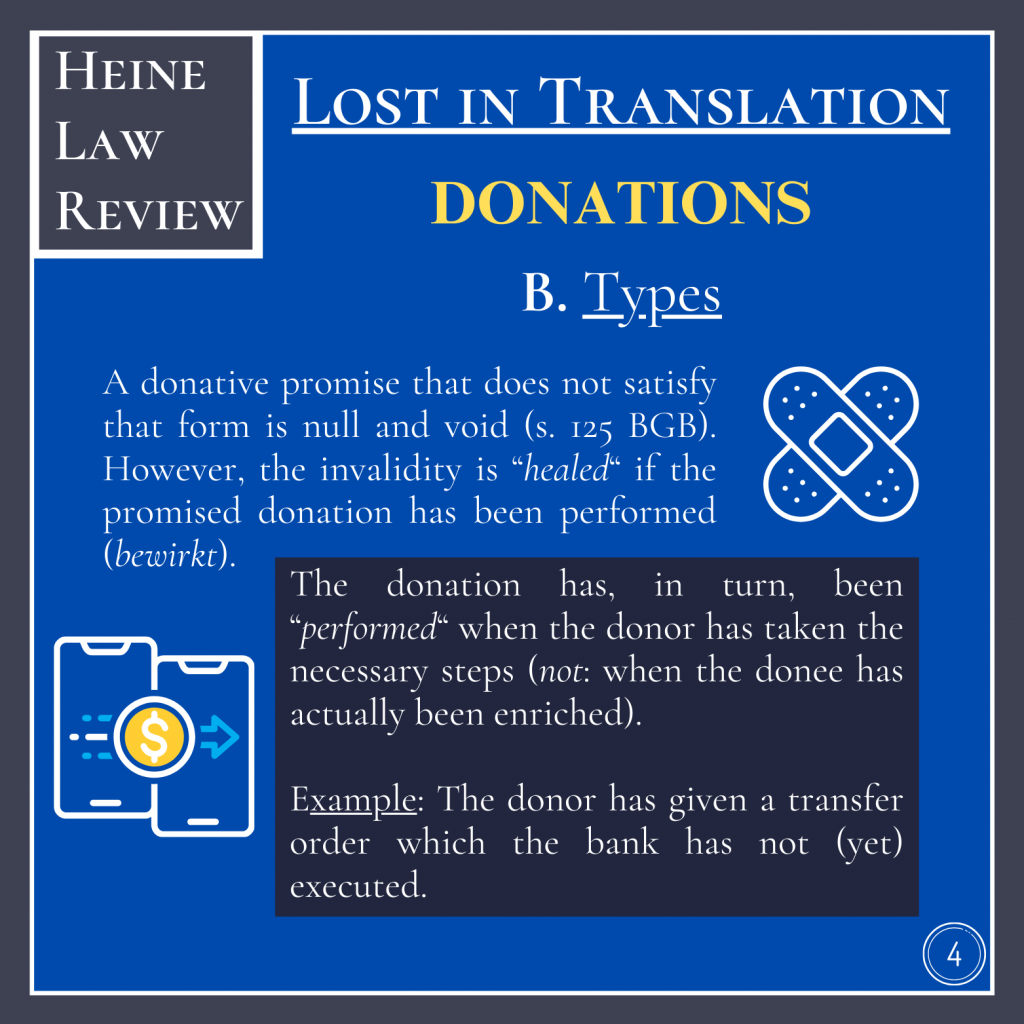
On the other hand, the enrichment may have taken place only after the donation had been agreed upon earlier. In that case, the donative promise has to be recorded by a notary (s. 518(1) BGB). A donative promise that does not satisfy that form is null and void (s. 125 BGB). However, the invalidity is “healed“ if the promised donation has been performed (bewirkt). The donation has, in turn, been “performed“ when the donor has taken the necessary steps (not: when the donee has actually been enriched). Example: The donor has given a transfer order which the bank has not (yet) executed.
A donation also may be subject to a condition, in the sense that the donee is obliged to render a certain performance (Schenkung unter Auflage, ss. 525-527 BGB). Since the donation is supposed to be gratuitous, the condition may not exceed the value of the donation.
It may also turn out that only one part of the enrichment was meant to be gratuitous. Such a “mixed donation” is treated according to the rules applicable to its parts (e.g. partially as a purchasing agreement) or, if unseparable, resembling the more overwhelming component.
C. Revocation
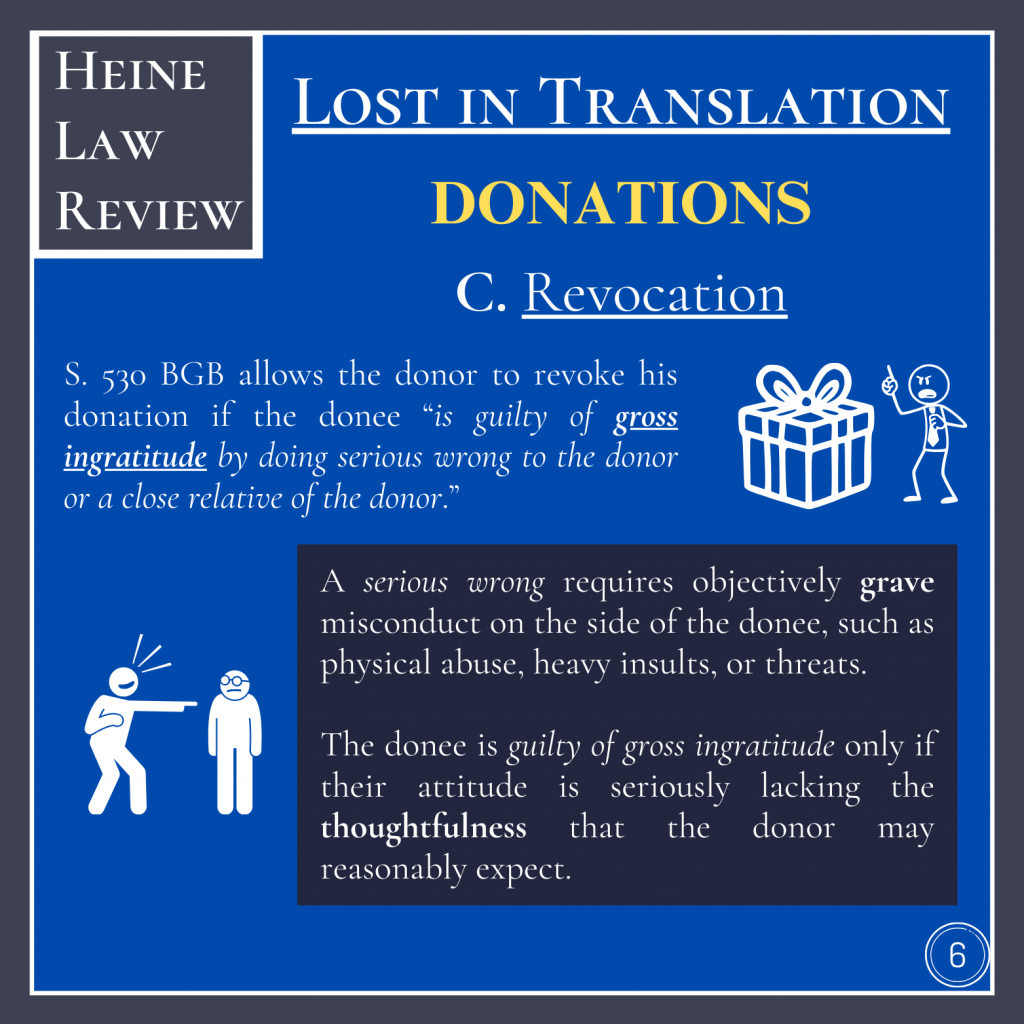
S. 530 BGB allows the donor to revoke his donation if the donee “is guilty of gross ingratitude by doing serious wrong to the donor or a close relative of the donor.”
A serious wrong requires objectively grave misconduct on the side of the donee, such as physical abuse, heavy insults, or threats. The donee is guilty of gross ingratitude only if their attitude is seriously lacking the thoughtfulness that the donor may reasonably expect.