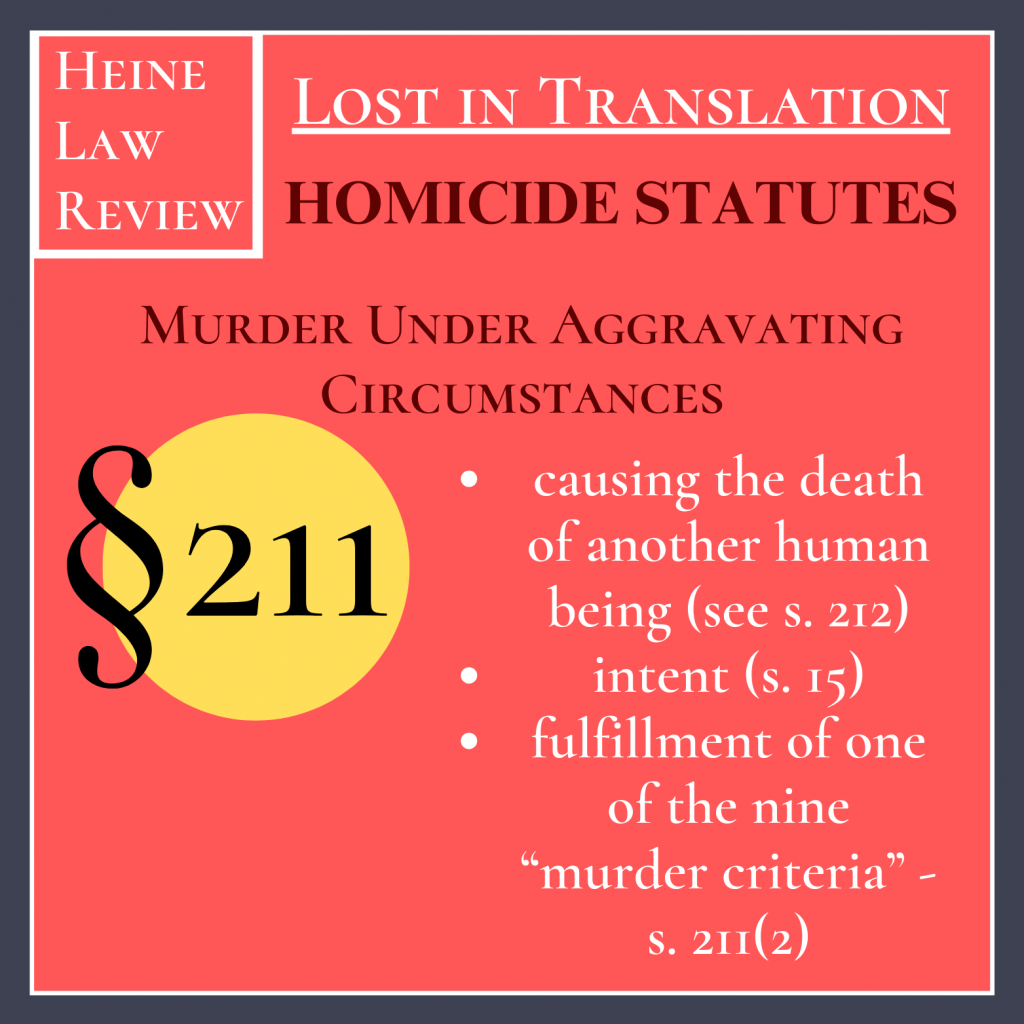
Last time, we took a first look at the system behind the ss. 211 and following of the German Criminal Code, dealing with homicidal offences. We discussed how s. 211 is a qualified form of intentional homicide or Totschlag, principly treated in s. 211. “Murder” in the sense of s. 211 (Mord), on the other hand is at hand if one intentionally causes the death of another human being if one of the nine murder criteria (Mordmerkmale) as per s. 211(2) is fulfilled.
The first three murder criteria relate to the mens rea, exemplifying especially heinous motivations behind the killing. The lust to kill (Mordlust) is named first, and is present if the perpetrator kills simply for the sake of seeing another person dying. In those cases, ending another life serves as an end unto itself, in the eyes of the killer.
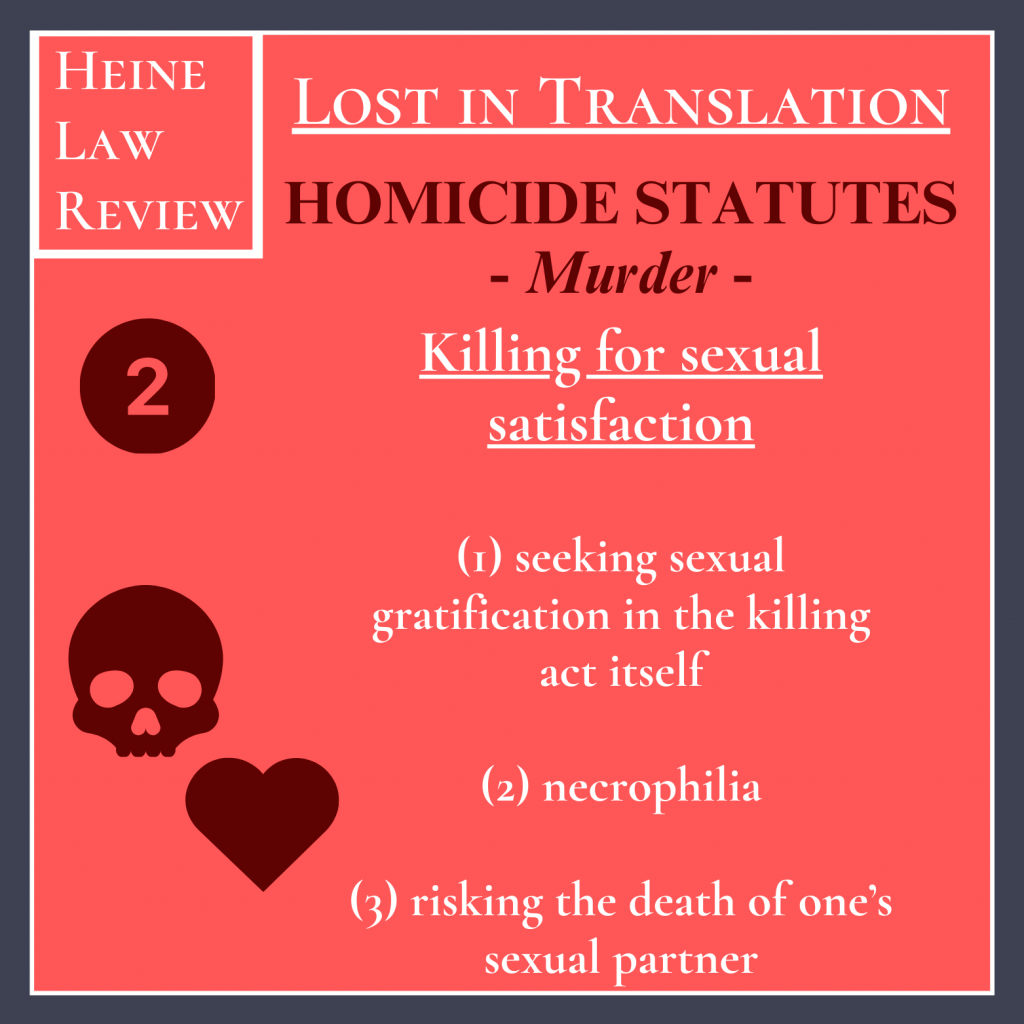
A lust to kill (Mordlust) on the part of the perpetrator is to be affirmed if they seek sexual gratification in the killing act itself, if they seek it in the corpse (as a necrophiliac, functionally), or if the death in question is constituted by the death of one’s own sexual partner, which the other party has atleast knowingly risked and thus approved of.
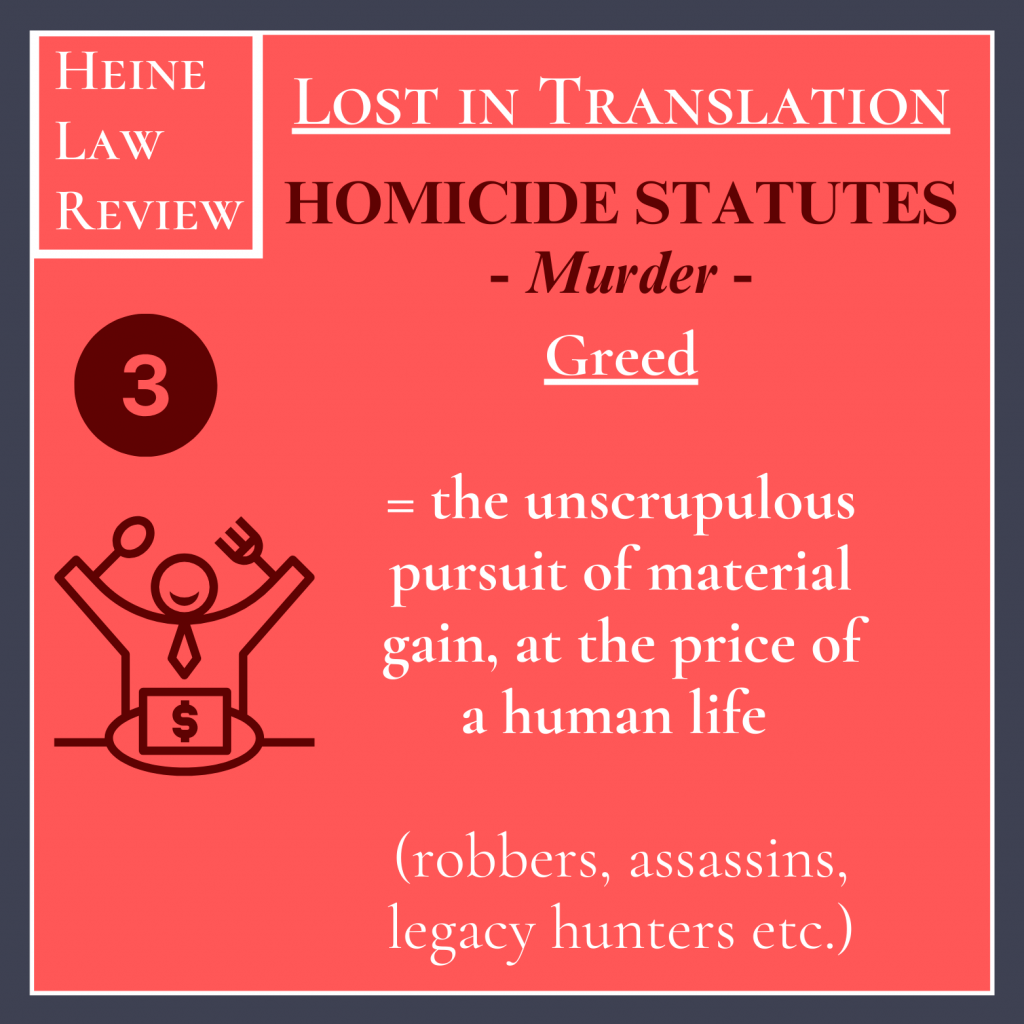
One kills out of greed (Habgier) if they unscrupulously pursue material gain at the price of a human life. This includes robbers, assassins, legacy hunters and similarly scheming offenders.
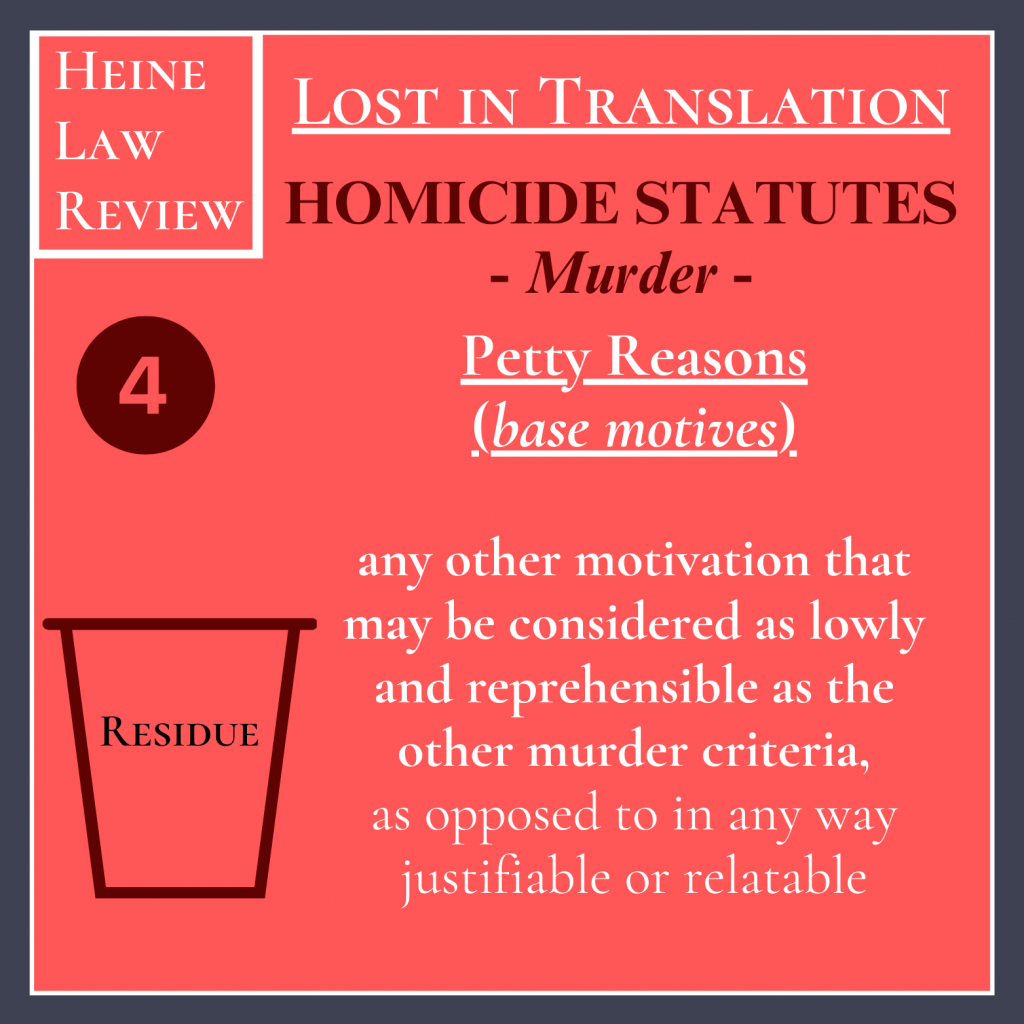
Lastly, any other petty reason or base motive (niedriger Beweggrund) is sufficient to constitute murder. Any motivation not already covered by the aforementioned criteria or the intention to hide or enable another crime (see Part 3) qualifies if it may be considered as lowly and reprehensible as the other murder criteria. The must not be in any way justifiable or relatable.
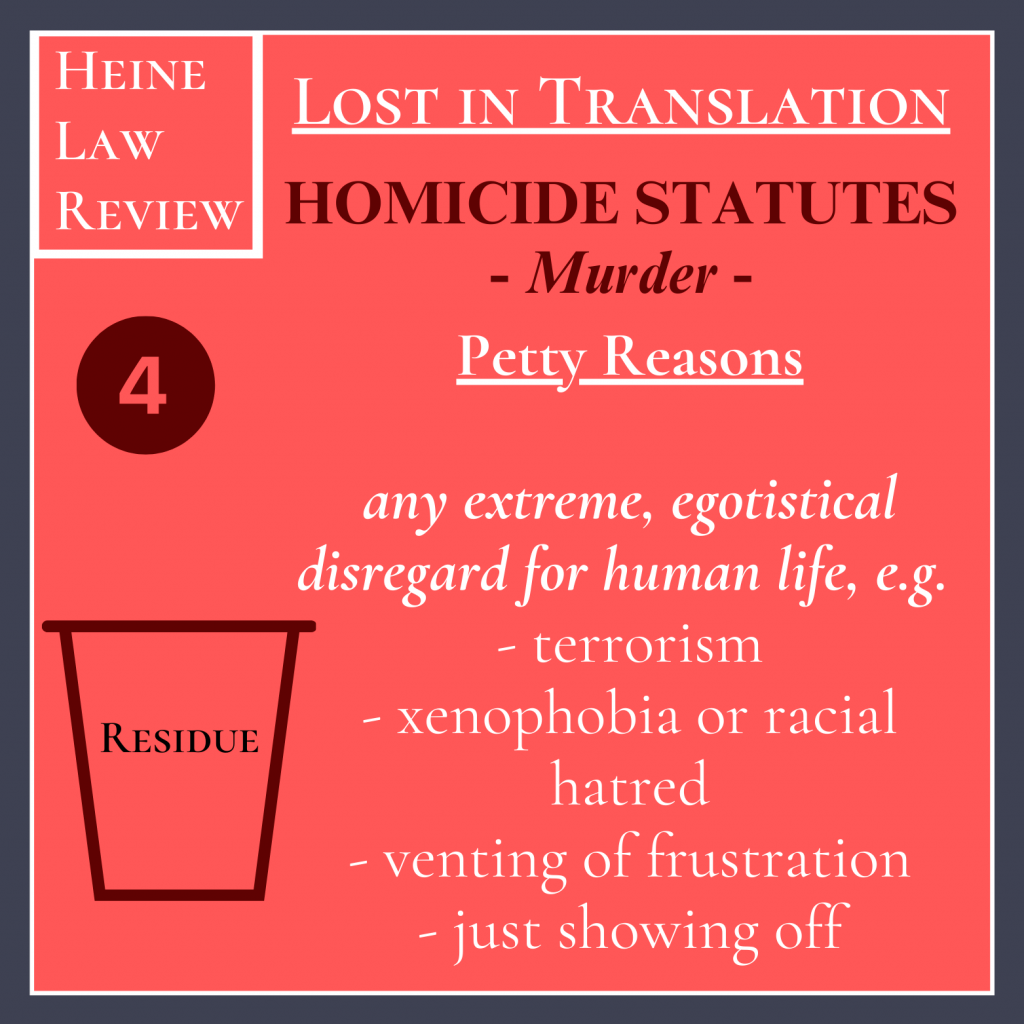
The offender thus needs to demonstrate an extreme, egotistical disregard for human life. This is typically considered present in cases of terrorism, xenophobia or racial hatred, just showing off or killing in order to vent one’s anger.