We are finishing up our brief explanation of the nine murder criteria in s. 211 of the German Criminal Code. For the first four, see Part 2! Up next: The objective as well as the remaining two subjective murder criteria…

Treachery (Heimtücke) is easily the most controversial, in part due to being one of the most extensive but also due to potentially discriminating e.g. physically weaker offenders. The perpetrator acts treacherously if they consciously exploit the victim’s lack of guile and ensuing defenselessness.
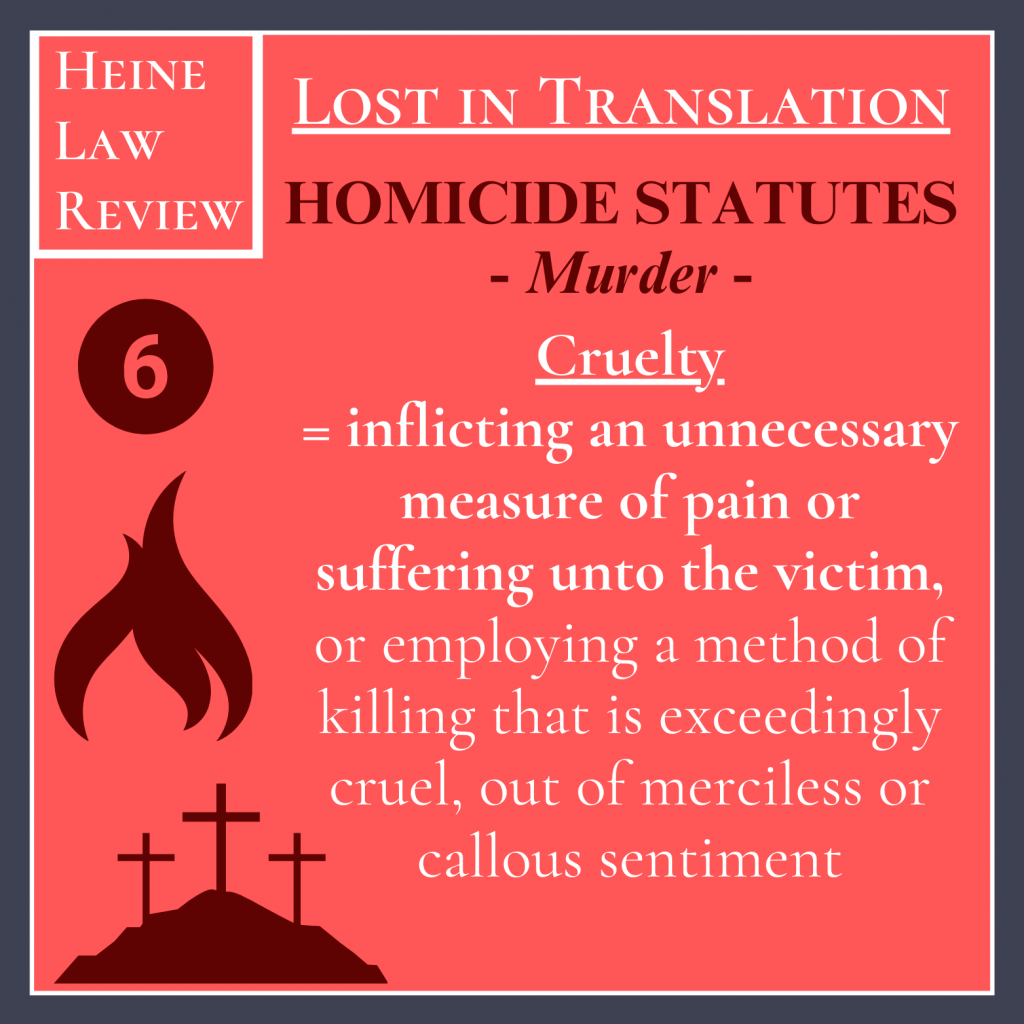
Cruelty (Grausamkeit) is present if the perpetrator inflicts an unnecessary measure of pain or suffering unto the victim (or employs a killing method that is exceedingly cruel, such as burning or crucifixion), out of a merciless or callous sentiment.

The last murder criteria relating objectively to the actus reus is the employment of means constitutung public danger (gemeingefährliche Mittel). Those are means that one cannot control and that are therefore suited to threaten the life or health of a multitude of people.


The third group of murder criteria is made up of two more subjective elements relating to the mens rea, being the intention to enable (Ermöglichungsabsicht) or hide (Verdeckungsabsicht) another crime in the wake of the homicide. The perpetrator must at least approve of the death of the victim, fully intending that this would facilitate them to hide or enable another offence, be it a misdemeanour or a felony. Avoiding negative social instead of legal consequences is sufficient, according to jurisprudence.