Transcript
A. Introduction
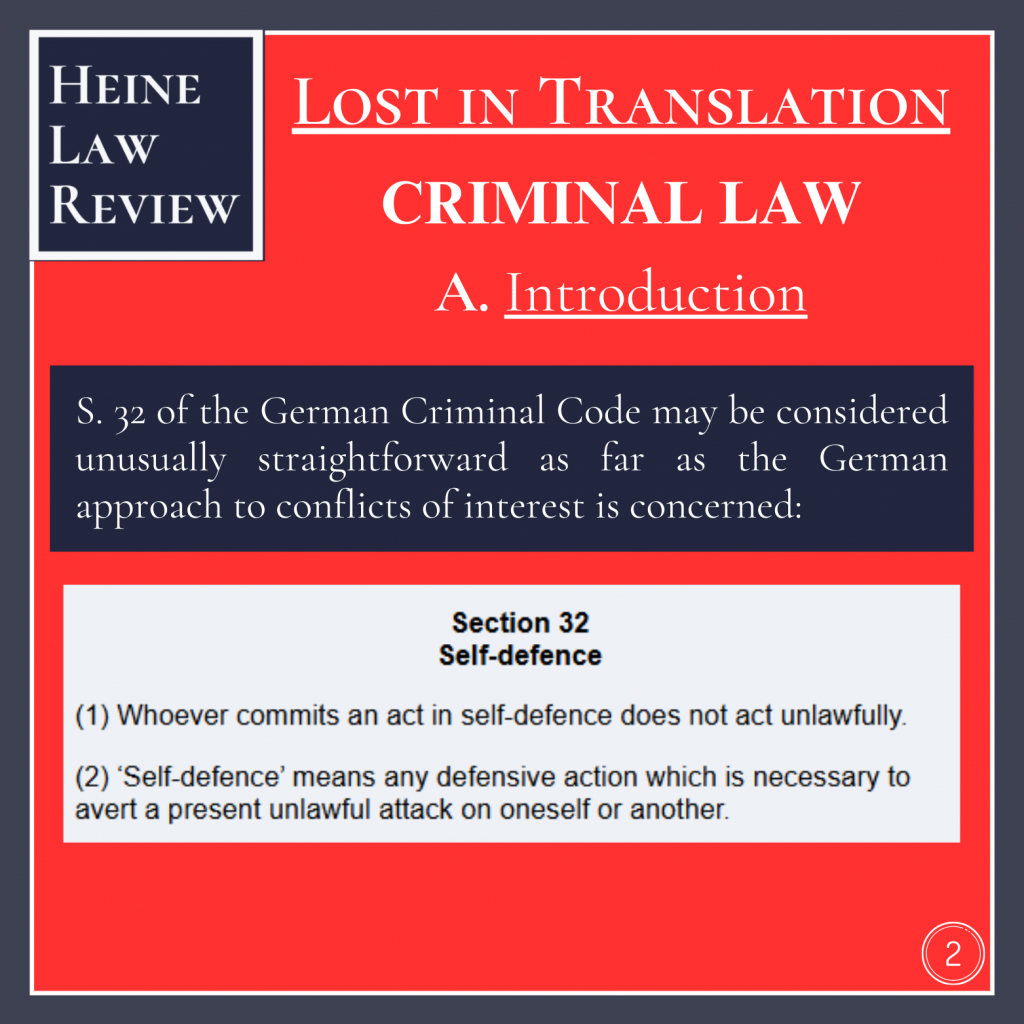
S. 32 of the German Criminal Code may be considered unusually straightforward as far as the German approach to conflicts of interest is concerned:
[Section 32 – Self-defence]
(1) Whoever commits an act in self-defence does not act unlawfully.
(2) ‘Self-defence’ means any defensive action which is necessary to avert a present unlawful attack on oneself or another.
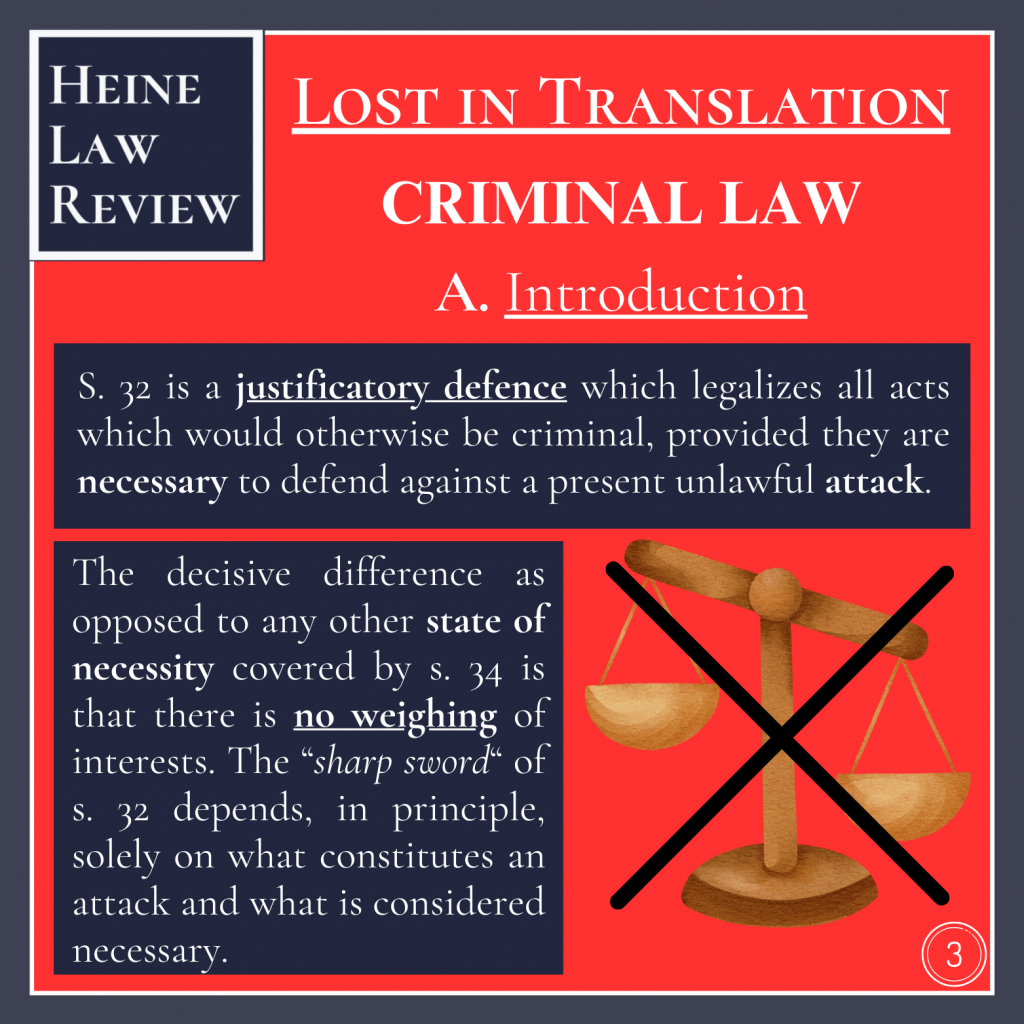
S. 32 is a justificatory defence which legalizes all acts which would otherwise be criminal, provided they are necessary to defend against a present unlawful attack.
The decisive difference as opposed to any other state of necessity covered by s. 34 is that there is no weighing of interests. The “sharp sword“ of s. 32 depends, in principle, solely on what constitutes an attack and what is considered necessary.
B. Defensive situation
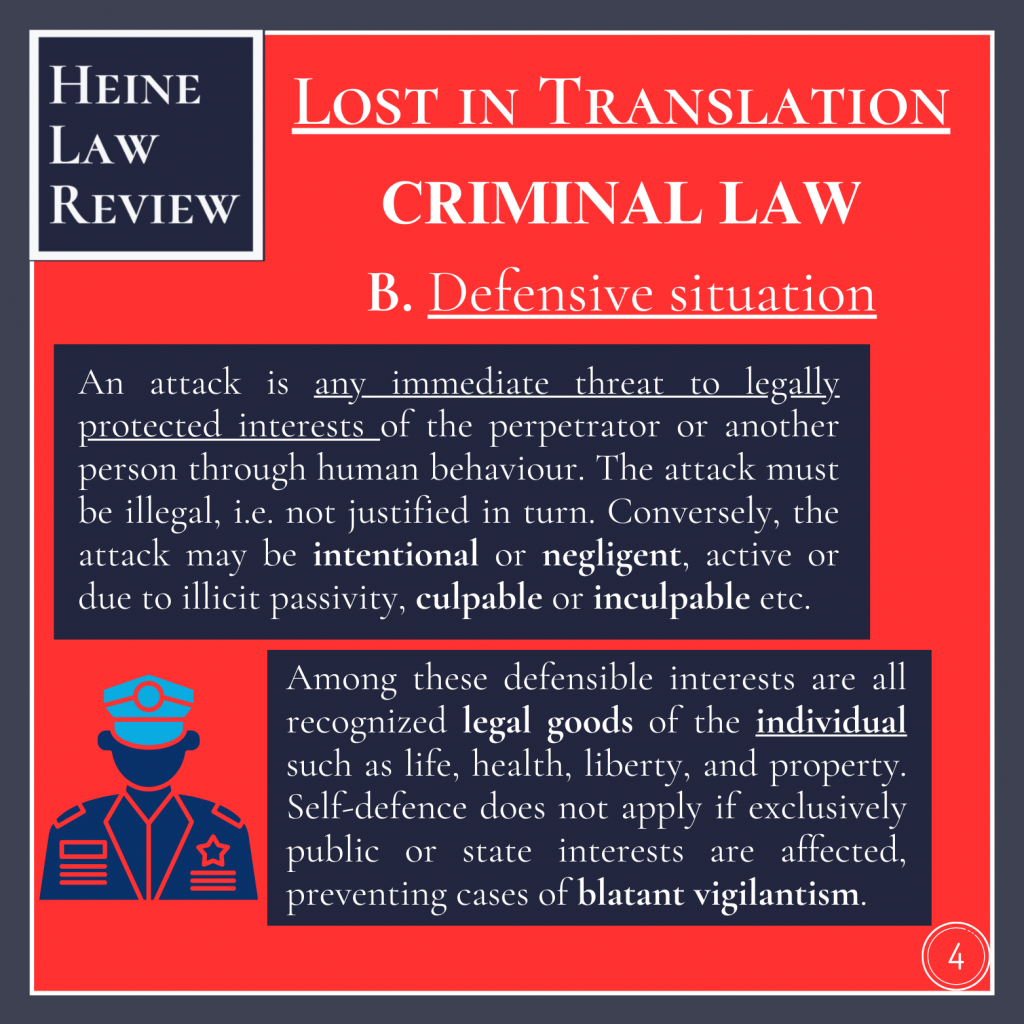
An attack is any immediate threat to legally protected interests of the perpetrator or another person through human behaviour. The attack must be illegal, i.e. not justified in turn. Conversely, the attack may be intentional or negligent, active or due to illicit passivity, culpable or inculpable etc.
Among these defensible interests are all recognized legal goods of the individual such as life, health, liberty, and property. Self-defence does not apply if exclusively public or state interests are affected, preventing cases of blatant vigilantism.
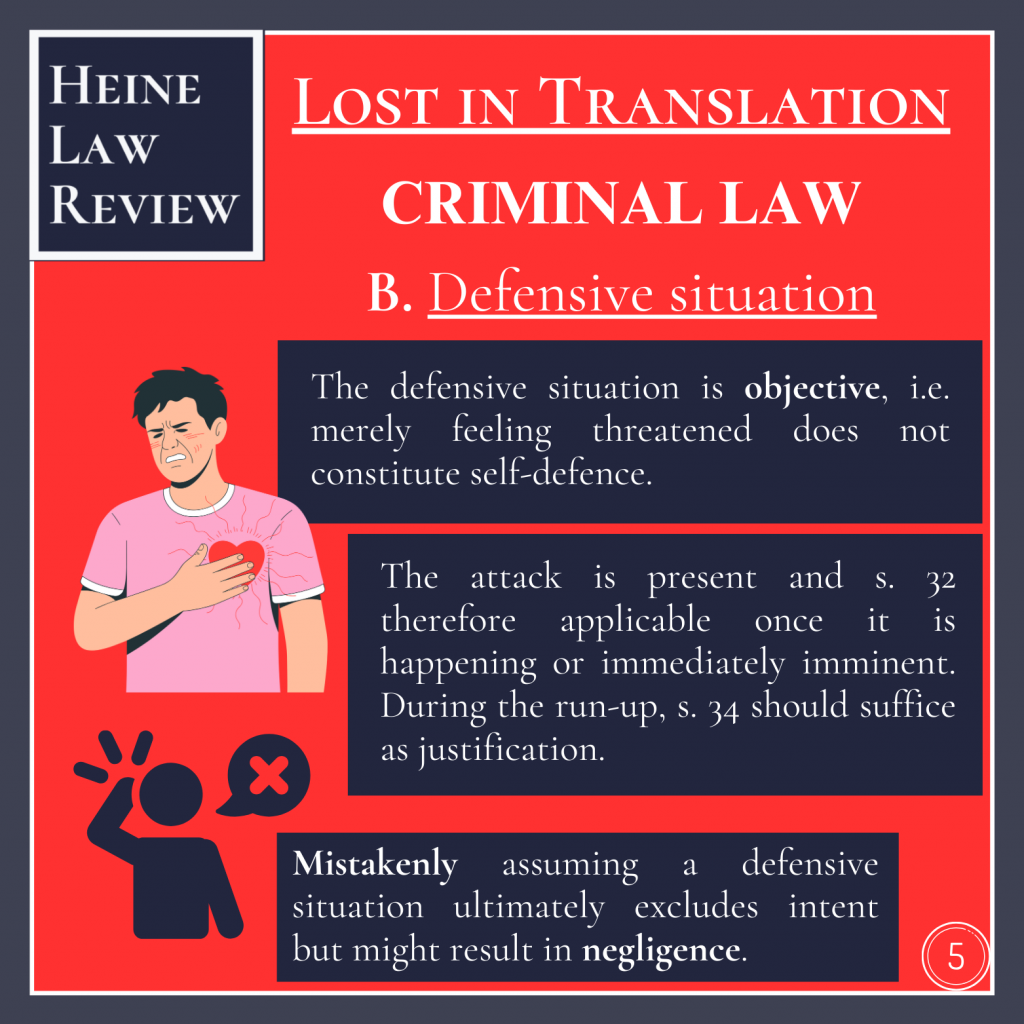
The defensive situation is objective, i.e. merely feeling threatened does not constitute self-defence.
The attack is present and s. 32 therefore applicable once it is happening or immediately imminent. During the run-up, s. 34 should suffice as justification.
Mistakenly assuming a defensive situation ultimately excludes intent but might result in negligence.
C. Defensive act
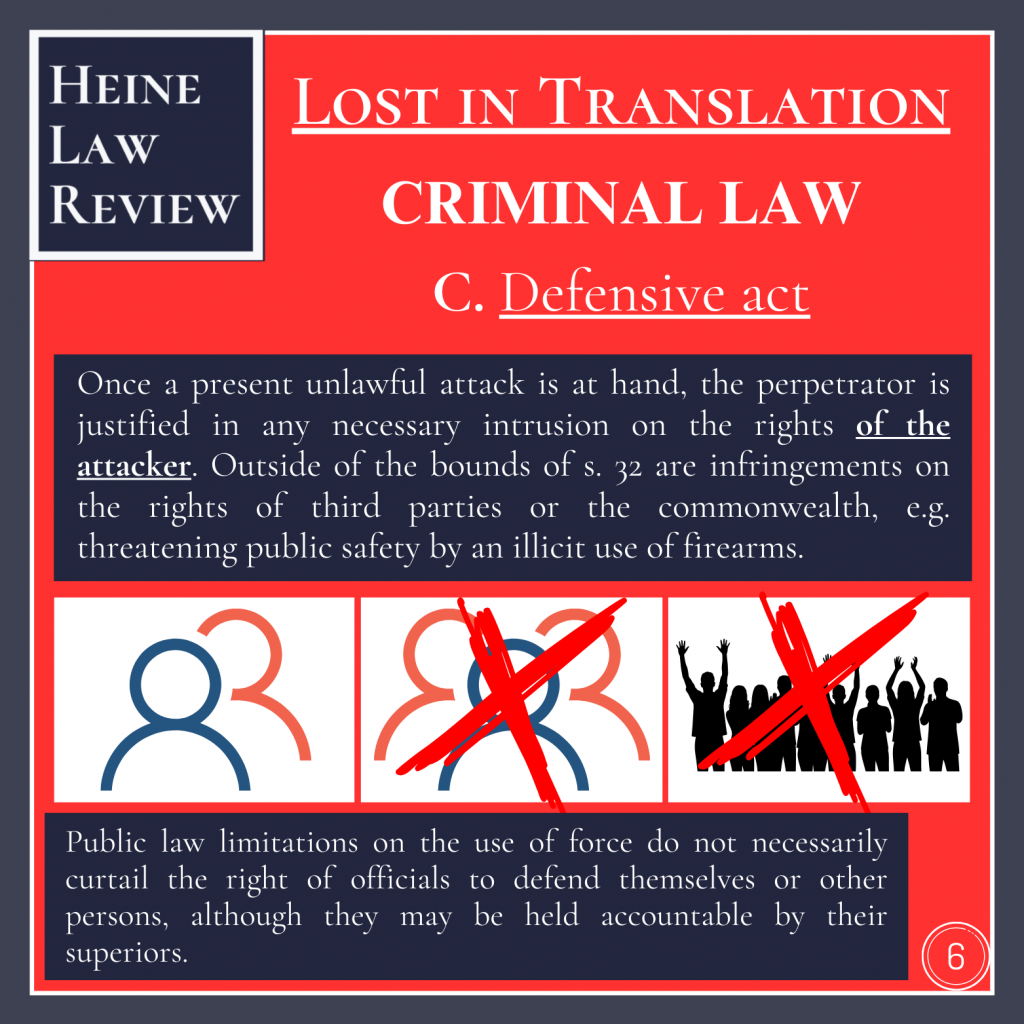
Once a present unlawful attack is at hand, the perpetrator is justified in any necessary intrusion on the rights of the attacker. Outside of the bounds of s. 32 are infringements on the rights of third parties or the commonwealth, e.g. threatening public safety by an illicit use of firearms. Public law limitations on the use of force do not necessarily curtail the right of officials to defend themselves or other persons, although they may be held accountable by their superiors.
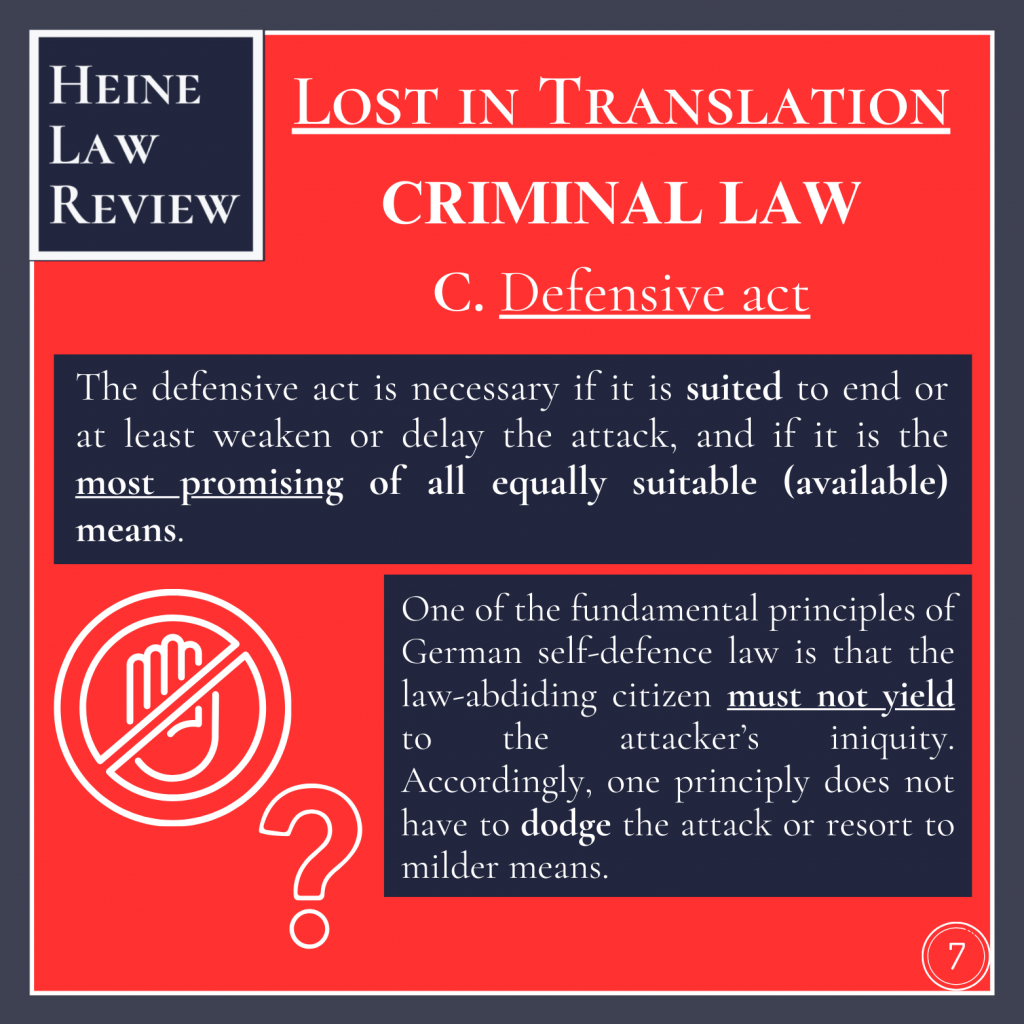
The defensive act is necessary if it is suited to end or at least weaken or delay the attack, and if it is the most promising of all equally suitable (available) means.
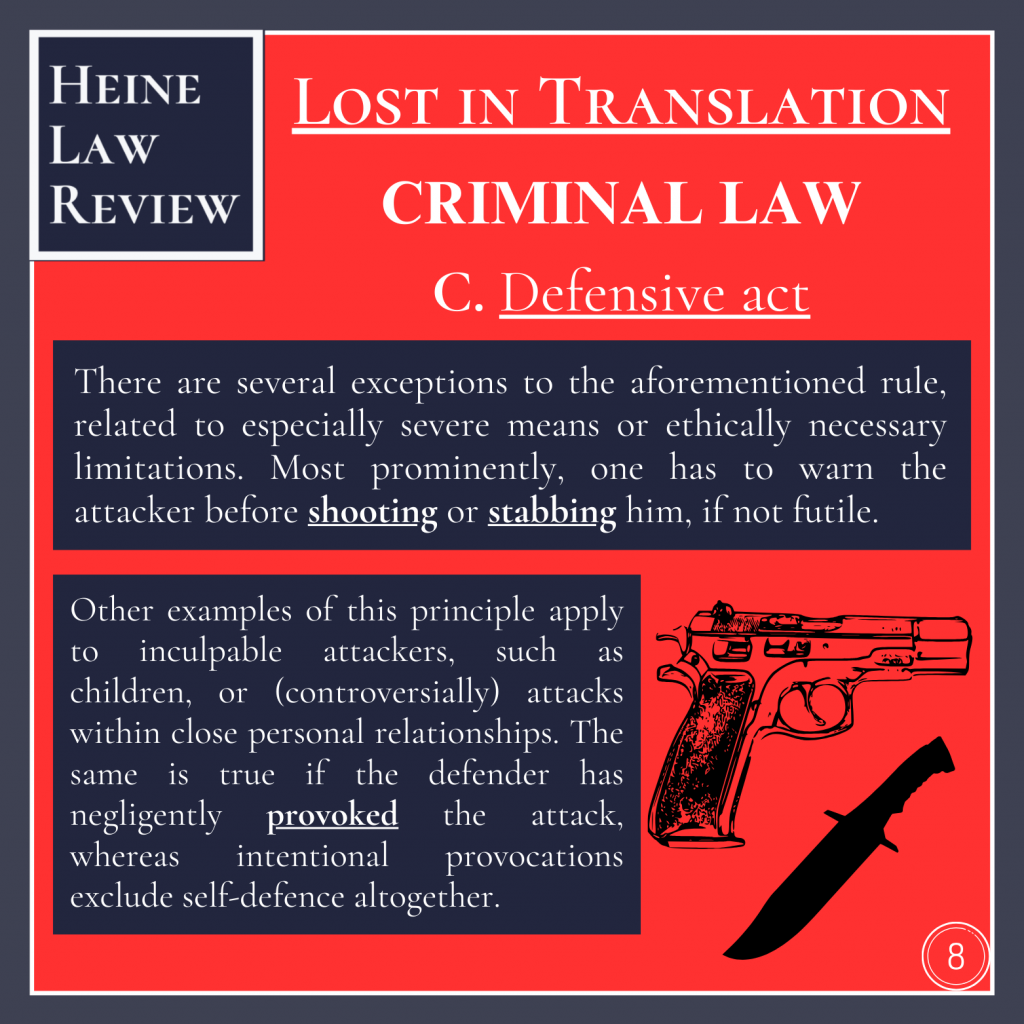
One of the fundamental principles of German self-defence law is that the law-abdiding citizen must not yield to the attacker’s iniquity. Accordingly, one principly does not have to dodge the attack or resort to milder means. There are several exceptions to the aforementioned rule, related to especially severe means or ethically necessary limitations. Most prominently, one has to warn the attacker before shooting or stabbing him, if not futile. Other examples of this principle apply to inculpable attackers, such as children, or (controversially) attacks within close personal relationships. The same is true if the defender has negligently provoked the attack, whereas intentional provocations exclude self-defence altogether.
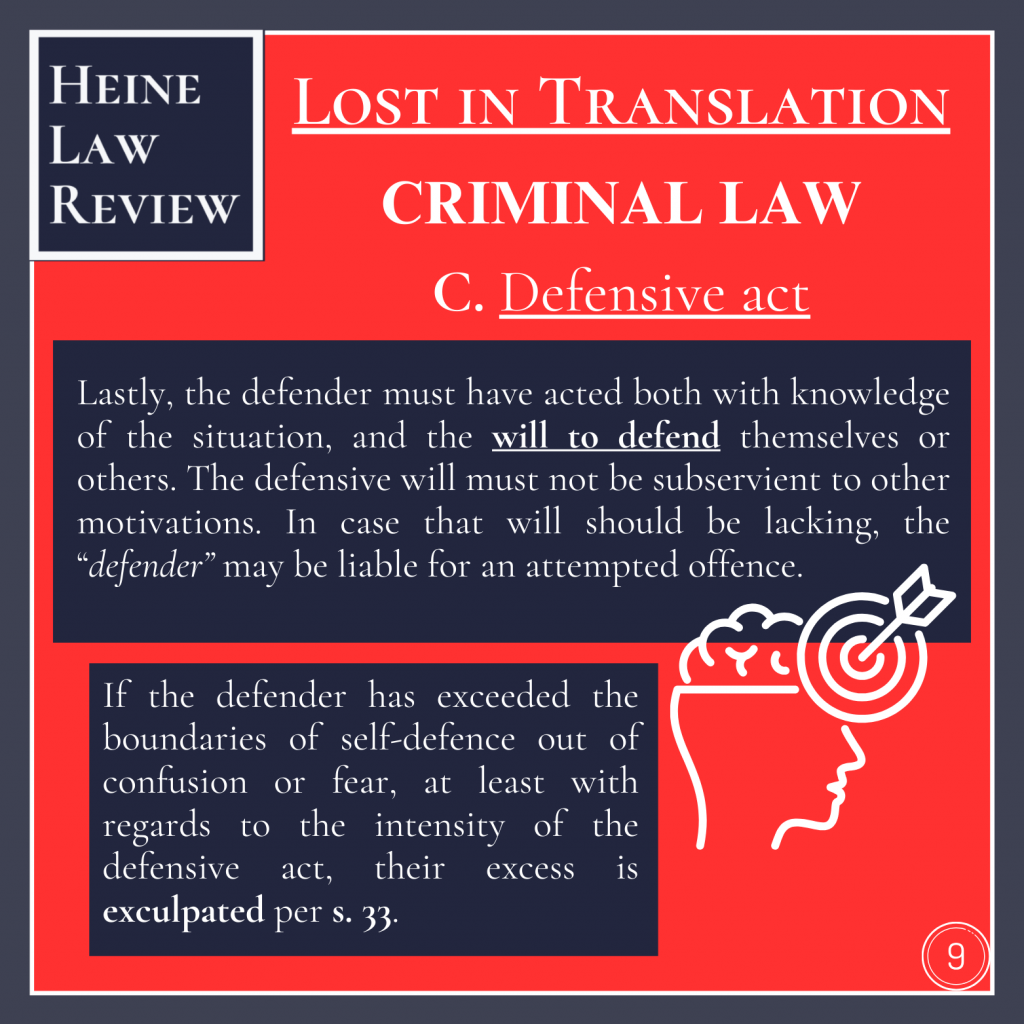
Lastly, the defender must have acted both with knowledge of the situation, and the will to defend themselves or others. The defensive will must not be subservient to other motivations. In case that will should be lacking, the “defender” may be liable for an attempted offence.
If the defender has exceeded the boundaries of self-defence out of confusion or fear, at least with regards to the intensity of the defensive act, their excess is exculpated per s. 33.